

Common Mistakes to Avoid When Getting Your Birth Certificate Verified?
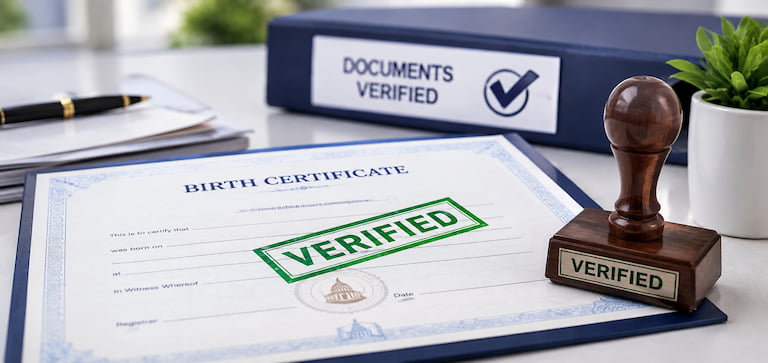
Verifying an important personal document is a crucial step for anyone planning to study, work, settle, or sponsor family members abroad. Birth Certificate Verification Mistakes can easily slow down the process causing unnecessary delays, rejection of application and extra costs. No matter whether your document is needed to immigrate, get education, or get a job, knowing how to do it, you can prevent most of the typical issues.
If you are preparing documents for international use, birth certificate attestation often becomes part of the legal documentation process after verification. It can save time to work with professionals who have experience such as Attestation.ae and thoroughly examine all the documents before submitting them. This guide will inform you about the most frequent mistakes that can be made and how to prevent them in order to have a successful verification process.
Understanding the Birth Certificate Verification Process
What Does Birth Certificate Verification Mean?
Birth certificate verification involves the formal procedure of verifying that a birth certificate is authentic and issued by the relevant government agency. The authorities are the ones who check the authenticity of the document in order to accept it to be used legally, educationally, immigration, employment or family issues in a foreign country. Making sure that they are properly verified helps to avoid document fraud and attain international acceptance.
Why Is Verification Required for International Use?
Before issuing a visa, residence permit, citizenship, school admissions or approvals of family sponsorship, many countries are mandated to present a verified birth certificate. Authentication helps in establishing the fact that the document is genuine and legally accepted by the authority that issues it. Without due verification, the applications can be rejected by the foreign authorities leading to delays in the travel plans or legal processes.
How Does Verification Differ from Birth Certificate Attestation?
Verification is the authentication of the birth certificate by verifying official documents and attestation is the legal endorsement of the documents by authorized government departments, embassies or ministries. The initial validation step is usually verification with attestation offering further legal authentication to the particular countries prior to the adoption of the document as an official document.
Common Mistakes to Avoid During the Verification Process
Submitting an Incorrect or Damaged Birth Certificate
Damaged, faded, laminated or incomplete Birth Certificates are one of the most common Birth Certificate Verification Mistakes. Applicants have a lot of the wrong copies of documents by submitting photocopies. The authorities tend to demand original certificates which are readable, clear and not distorted. Before you submit your document, make sure that you carefully check it to avoid being rejected or asked to send in new documents.
Providing Incomplete Supporting Documents
The verification may need a number of supporting documents other than the birth certificate itself. Losing passport copies, identity documents, authorization letters, residence documents, or application form can cause a lot of delays in processing. To prevent repetitive visits or interruption in processing, make a full list of documents you need before submitting your application depending on the regulations in your destination country.
Choosing the Wrong Verification or Attestation Process
Various documentation practices are adopted in various countries. Others need to be embassy legalized and others need to be authentication by the ministry of Foreign Affairs or Apostille certified. Any choice of the incorrect verification channel may lead to the dismissal of applications and extra costs. There are legal requirements which are always known before starting the verification process.
Entering Incorrect Personal Information
A single data entry mistake can cause significant problems when verifying documents. Variations in spelling, wrong date of birth, discrepancy in passport numbers, and discrepancy in the names of parents usually lead to rejection of the application. To have a consistent and checked application, do not forget to recheck all the details in all the documents submitted and then send your application to be verified.
Ignoring Translation Requirements
Some of the countries will only accept translations that are translated into the official language by certified translators. Official translations can be rejected because of submitting unofficial or inaccurate translation. Always check language requirements beforehand and have certified translations, where needed, to get your birth certificate to the international legal standards without causing undue delays.
Missing Important Application Deadlines
Some of the applicants take time up until the verge of starting before they can start. Delays in verification and legalization can have an impact on visa applications, immigration processes, school admissions, job opportunities, and family sponsorship timeframes since the verification and legalization can take several working days or even weeks. Early start will give time to fix unforeseen problems.
Selecting an Inexperienced Service Provider
When selecting an agency that is not reliable, you are likely to submit incorrectly, mishandle documents, conceal charges or take too long to process. A trained document expert is aware of country-specific, supporting documents requirements, and legal processes. The collaboration with educated specialists reduces mistakes and ensures more confidence during the verification process.
Overlooking Document Validity
The birth certificate should be accompanied by supporting documents that should be valid throughout the verification process. The identification documents can be expired, damaged, outdated or incomplete supporting paperwork which can lead to rejection. Thoroughly go through all the documents to ensure validity before application.
Not Monitoring the Application Status
Most applicants reckon that the process will automatically end without any follow-up. Monitoring your application will assist in determining which documents are missing, or some other requirements, or any processing delays beforehand. Follow-ups will enable you to respond in good time, save time on waiting and increase chances of having the documents approved in good time.
Best Practices for a Smooth Verification Process
Review Every Document Carefully
Review all documents submitted thoroughly prior to application. Check spelling, dates, signatures, official stamps, state of the document and paperwork. Thorough inspection will reduce errors, minimize processing time and enhance success of successful verification in the initial submission.
Understand Country-Specific Requirements
Various countries have different documentation regulations. Check destination specific verifying, legalizing, translating and authenticating documents prior to submissions. These requirements are better understood beforehand eliminating the need to make corrections and extra charges and verification processes.
Prepare Certified Translations When Needed
In case your country of destination needs documents in a different language then have them certified translated prior to submission. Certified translators make legally recognized translations that are equal in accordance with the official requirements which can assist authorities in processing applications without further corrections or substitution of documents.
Keep Copies of Every Document
Keep clean copies of all documents submitted of both photocopies and digital versions, including supporting identification and application forms. Such copies will be very helpful when they are requested to be verified further or in case the original documents are not available at the time of processing.
Work with an Experienced Attestation Specialist
Skilled specialists are familiar with the documentation processes, embassy regulations, and legal procedures in particular countries. Their directives minimize the errors in paper works, lessen the processing time, and make sure that the documents are taken through the right verification route between its inception and the final stage of processing.
Apply Well Before Your Travel or Visa Deadline
Always do not wait until the date of your visa appointment or a day to travel. Start the process of verification a few weeks before the actual start of the process to ensure that there is time to correct documents, get more approvals, translations or government processing without causing any unnecessary stress.
Why Avoiding These Mistakes Saves Time and Money
Faster Document Approval
Properly made documents pass through verification in a much more effective way. Proper applications helps to minimise the number of requests to submit further documents and administrative wastage, which enables applicants to be able to finish their legal informality quicker.
Lower Processing Costs
Eliminating errors will save on reuse application fees, courier fees, replacement of documents, translation fee revisions and other government processing fees. Proper planning will eventually save money as well as time.
Fewer Rejections and Resubmissions
A well documented document would go a long way in alleviating chances of rejection. Applications that are properly submitted with correct information will not be re-submission, which saves the applicants on long waiting time and repetition of paper work.
A Smoother Visa or Immigration Experience
Document authentication facilitates effective visa processing, immigration applications, employment verification, admissions to educational institutions, and family sponsorship. A well-documented application process makes the process of international application a lot more smoother.
When Should You Seek Professional Assistance?
Complex Country Requirements
Some nations have several authentication procedures that include government departments, embassies and foreign ministries. Professional support will aid applicants to comprehend complicated processes and file papers within the legal guidelines.
Urgent Processing Needs
In case of quick verification in the visa interviews, employment, university admissions, or emergency travel, the experienced specialists may advise the applicants on priority processing alternative and minimize unnecessary delays.
Multiple Documents for Verification
Applicants will usually be required to get a number of documents checked at the same time such as marriage certificates, educational certificates, police clearances, and birth certificates. Professional coordination makes managing documents easier and lessens administrational confusions.
End-to-End Document Support
Professional document specialists have a role to play in the process, starting with checking of documents and preparation of applications, and proceeds to the verification, legalization, translation and delivery of final products. Full support eliminates stress and enhances efficiency in the overall processing.
Conclusion
Avoiding Birth Certificate Verification Mistakes can start with proper preparation, proper documentation, certified translations when necessary, and country-specific knowledge of the verification processes. Looking through all documents properly before submissions can reduce time wastage, duplication of applications, unwarranted cost, and rejection of requests when internationalizing documents.
Prior to the submission of your application, check your initial certificate, supporting documents, identification information, translation needs and processing timelines. Professional advice whenever there are complexities in the requirements would be more accurate, easier to verify and more assured all the way through the document approval process.
Frequently Asked Questions
1. What is the difference between birth certificate verification and attestation?
A: The authentication of documents is through verification whereas the attestation assures legal authentication to the international acceptance.
2. What documents are required before starting the verification process?
A: Usually, you require the original birth certificate, copy of passport, proof of identification, application form and any other documents that are essential in giving such authorizations.
3. Can mistakes delay the approval of my birth certificate?
A: Yes, wrong information, lost documents, broken certificates or unfinished applications are usually a hindrance to the approval of verification.
4. Is document translation mandatory for every country?
A: No, the need of translation is based on the official language and the rules of documentation of the destination country.
5. How long does the verification process usually take?
A: The processing time depends on the country, issuing authority and on the required authentication steps, which can be a few days to several weeks.
6. Can I complete the process online?
A: Certain application procedures can be done online yet original documents may have to be submitted or verifying them physically.
7. How do I choose a trusted document verification service?
A: Select a provider that has a solid experience, whose procedures are clear, has positive reviews, specific to the country of operation, and dependable customer support.